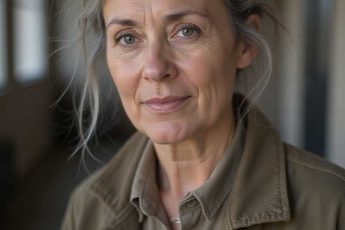
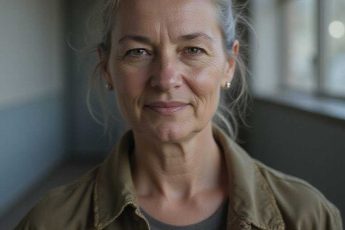
In this diary I am setting down the events from those gray February days when our daughter came into the world, because I need to face what I did and what it cost us. The bag had stood ready by the bed since the evening before. Marleen had put it together herself with diapers, the discharge outfit and those tiny onesies in white and yellow stripes she bought back in the eighth month. The nurse said we had to be there by ten in the morning and Marleen simply nodded as though it could not be otherwise. I would answer. I would arrive. I was always on time.
I had plugged in my phone and lain down elsewhere that morning while our girl slept in the clear bassinet beside Marleen, small and wrinkled with dark fuzz at the back of her head. Marleen watched her and told herself later that everything would change now, that I would finally understand, that three days in the maternity ward would force a man to grow up.
I did not arrive at ten.
She rang me and I let it go. She wrote and I read without answering. Around half past ten I finally sent a message: I would be there soon. She put the phone away. The nurse brought papers to sign and the assistant helped dress our daughter. We had already named her Annelies before the birth.
Eleven came and I still was not there.
She called again and this time I answered, my voice thick and slow as if I had only just woken.
“Jeroen, where are you?”
“On my way. Traffic.”
“What traffic on a Sunday?”
“Well,” I paused. “Leaving now.”
She hung up. Annelies moved in the wrap and blew bubbles. Marleen looked out at the gray February yard, bare trees and cars lined along the curb. Across the road from the hospital stood a small café with yellow letters on the glass. She had seen it for three days from the window but had never really looked until then.
A man sat at one of the window tables. Blue jacket, dark hair, back turned toward her. She knew that back by heart from all the nights I rolled to the wall and fell asleep before she could say good night. Opposite him sat a young woman. A gray expensive stroller with large wheels stood beside their table.
She stayed at the window perhaps three minutes. Then she took the bag, asked the assistant to hold Annelies and went down to the duty nurse.
“I need five minutes outside,” she said. “Are the papers ready?”
“They are. But you should wait for your husband,” the nurse said over her glasses.
“I will not be long.”
She left through the service door that Ingrid, the woman from the next bed who had been discharged the day before, had shown her. February hit her face, slipped under her coat and into her ears. She crossed the road and pushed open the café door.
Inside it smelled of coffee and cinnamon. Quiet jazz played. She saw us at once.
I held a cup in both hands and laughed with my head tilted back, shoulders loose. She had not seen me that relaxed for three months, since her belly had shown.
The woman talked and smiled. She had fine features and short brown hair. No sound came from the stroller; the child inside was asleep.
Marleen walked to the table and stood there.
I looked up and the smile left my face as if someone had switched it off.
“Marleen…”
“Hello,” she said. “You said you were coming.”
I set the cup down. The woman looked at her with polite surprise.
“Marleen, wait, this is not…”
“Not what I think?” She kept her voice even though she felt other people watching. “You did not answer at ten. You wrote ‘soon’ at half past ten. It is almost twelve. I stood at the window and saw you, Jeroen. Saw you clearly.”
“Marleen,” I stood. “Let us go outside.”
“No need. I must return soon. Annelies is there.”
The woman sat straighter.
“Excuse me,” she said. “Are you his wife?”
“Yes.”
“I am Karin van der Meer. I work with Jeroen.”
Marleen looked at her, then at the stroller.
“We met here by chance,” Karin continued. “I live nearby and came in with my daughter. Jeroen must have come for coffee too. We just started talking.”
“How long have you been talking?”
Karin waited a moment.
“I arrived around nine.”
Marleen turned to me.
“Around nine. You were here at nine in the morning. You knew the discharge was at ten.”
“Marleen…”
“You knew?”
“I knew,” I said without looking away, though something small and unsteady moved inside me. “I only meant to stop for coffee. Five minutes.”
“Three hours, Jeroen. Three hours is not five minutes!”
The child in the stroller stirred. Karin leaned over and fixed the blanket. Her daughter was about three months old.
“I am sorry,” Karin said quietly to Marleen. “I did not know about the discharge. He never said.”
“It is all right,” Marleen answered just as quietly. “It is not your doing.”
She turned to me again.
“The papers are ready. Park the car at the service entrance. I will tell the guard to let you through. Wait there.”
Then she left.
She crossed back slower than she had gone. February did not cut as sharply, perhaps from the café warmth or perhaps from something else inside. She thought Annelies knew nothing yet about discharges or waiting. At three days old her only tasks were to breathe and feed. Her whole life lay ahead and Marleen wanted it to be good.
The assistant waited with Annelies in her arms.
“Has he arrived?”
“He will be here,” Marleen said. “Soon.”
She took our daughter. The smell of milk and talc was so real that the café, the blue jacket and the music all drew back a little.
The nurse handed over the last papers. Marleen signed where required, dressed herself and then dressed Annelies, fastening the three buttons even though her hands shook.
I waited at the service exit with the car exactly where she had said. I got out to meet them and reached for the bag. She gave it to me. Then I tried to take Annelies and she did not let me.
“Marleen…”
“Later,” she said. “Home first.”
I did not argue.
We drove in silence.
Annelies slept in the car seat while Marleen sat in the back with her hand on the side. I drove. An old tree-shaped air freshener still hung from the mirror since December; she always forgot to remind me to remove it.
“Is she asleep?” I asked.
“Yes.”
“Good.”
February streets passed outside, gray with gritty snow along the pavements. Few people about. An advertisement for some bank on the side of a building.
Marleen watched Annelies, who had the habit of opening her mouth slightly in sleep as if about to speak and then saving it for later. She had already come to love that habit.
“Marleen,” I said.
“Later,” she answered again.
“I just want to say…”
“Jeroen. Later.”
I fell quiet. A red light stopped us. I tapped my fingers on the wheel, lightly, a habit. Green. We moved on.
She thought the maternity ward was behind us now. Ahead lay the apartment where she had been a different person three days earlier, or perhaps the same. She did not know.
We parked at the entrance. I took the bag. She took Annelies. We rode the lift to the sixth floor. I worked the key in the lock for a long time, as always, because we had meant to change it but kept putting it off.
“Welcome home,” I said quietly, not sure to whom.
“Thank you,” she replied.
At home it smelled as it had three days earlier, a little coffee, a little dust, a little of my aftershave. Two cups stood in the kitchen sink. She counted them at once. Two, not one.
She laid Annelies in the white crib we had prepared two months before, with its cloud mobile. Annelies turned her head and quieted. Marleen came to the kitchen.
“Who was here?” she asked.
I stood at the window and did not turn at once.
“In what sense?”
“Two cups in the sink. I left for the hospital on Thursday. Today is Sunday. Who drank from the second?”
“My mother stopped by.”
“Your mother came?”
“Yes.”
“When?”
“Friday, I think.”
She turned on the tap, took a sponge and washed both cups without a word, then set them to dry.
“Jeroen,” she said without turning. “I want to talk but not now. I need to feed Annelies and sleep at least an hour. After that we talk.”
“All right,” I said, my voice careful as someone stepping on thin ice.
“And I want you to be honest. Not now, later. But honest.”
“I am honest.”
She turned at last.
“You sat in the café across from the hospital from nine in the morning on the day our daughter was to be discharged. You silenced your phone and did not answer until I called myself. That is not honest, Jeroen. It is even mean.”
I looked at her. She knew that expression from four years of marriage: not guilt but the look of someone caught. I felt exposed rather than sorry.
“I will explain,” I said.
“I am listening. But not now. In two hours.”
She went to Annelies.
Annelies fed quickly, greedily and with full seriousness. Marleen looked at her and thought this was someone who needed no explanations or reminders to be honest, someone who simply needed her, all of her, right then.
She laid her down and lay down herself. She thought she would not sleep but was gone before the thought finished.
She woke after an hour and a half. Annelies slept. The apartment was quiet.
I sat in the kitchen with coffee, phone face down. When she came in I slipped the phone into my pocket too quickly.
She poured water and sat opposite.
“Speak,” she said.
I waited, then began.
“Karin and I have worked together two years. You know we were on the same project, that tender in November. She went on leave before it finished so we talked a great deal.”
“I remember that tender,” she said. “You came home at ten at night. I was seven months along.”
“Yes. We worked long hours.”
“And?”
“And nothing. Just work.” I looked at her. “Marleen, I swear there is nothing between us.”
“Nothing was, or nothing is?”
A small pause, but she caught it.
“Nothing is,” I repeated.
“But there was?”
I set the cup down.
“Marleen…”
“Yes or no.”
“It is more complicated than yes or no.”
She nodded very slowly.
“I see.”
“Wait.” I reached out but she did not move toward me so I drew back. “It was once, before you were pregnant. A mistake. I stopped it myself.”
“Once.”
“Yes.”
“And today you simply happened to be in the café across from the hospital exactly when I was waiting.”
“I stopped for coffee, saw her and we talked. Marleen, I did not plan it, I swear.”
“You did not plan it,” she repeated. “You simply did not come for your daughter’s discharge. Not on purpose. It just happened.”
I stayed silent.
She walked to the window and looked at the familiar yard. She thought of watching the same sky from another window three days earlier.
“Jeroen,” she said without turning. “I will not make a scene. I have no strength and honestly no wish. We have a three-day-old daughter. I want you to understand one thing.”
“What?”
“I could have forgiven a mistake if you had told me yourself before I saw you from the window. Do you see the difference?”
I was silent.
“You did not come to the discharge because you stayed in the café too long. You did not come because sitting there mattered more to you. It is not even about Karin. It is about what mattered more to you.”
She turned.
“I am not making any decisions today. Today I feed Annelies and sleep. Tomorrow the same. In a week we talk again and you tell me everything honestly. Not ‘once’, not ‘a mistake’, honestly. Then I will think.”
“Marleen…”
“That is all I can do now.”
I nodded quietly.
“All right.”
The next days felt strange, thick like cotton wool. Annelies slept, ate and stared at the ceiling with the serious look of someone solving an important question. I moved quietly through the apartment, cooked, went out twice for diapers and once for her medicines. She neither sent me away nor called for me.
On the third day my mother rang.
Marleen answered out of habit.
“Marleen,” Geertje’s voice was tight, a little higher than usual. “How are you? How is Annelies?”
“We are fine.”
“Listen, Jeroen is acting odd. What happened?”
“Talk to him yourself.”
“Marleen, well…”
“Geertje,” she said calmly. “I love and respect you but I cannot talk about this now. I feed the child every three hours and hardly sleep. When I am ready we will talk.”
A pause.
“All right,” my mother said. “Sorry.”
That surprised her.
“I will bring soup tomorrow. May I?”
“Yes,” she said. “Thank you.”
Geertje arrived the next day at noon with a pot of chicken soup and a bag of pastries. Marleen opened the door. Geertje came in, removed her shoes and coat and went straight to Annelies.
“Lord,” she said quietly. “What a beauty.”
Annelies slept. Geertje stood over the crib a long time, hands folded.
“May I hold her?” she asked at last.
“Wait, let her sleep. She only just dozed off.”
“Of course.” Geertje went to the kitchen and unpacked the soup. “Are you hungry?”
“A little.”
She served the soup and sat with a cup of tea, my bergamot tea that Marleen did not like.
They sat in silence.
“Marleen,” Geertje began. “I will not interfere where I should not.”
“Good.”
“But I want to say one thing.”
Marleen ate and waited.
“He called me. Jeroen. Told me what he did.” She held the cup with both hands and looked into it. “I will not defend him. He is a fool. He has always been a bit of a fool in such matters, something happens in his head and he stops thinking. But he is not a bad man. I know that for certain.”
“Geertje,” she said. “I am not saying he is bad.”
“No?”
“No. That would be easier.”
Geertje looked at her then nodded slowly, as if something had become clear.
“You are a smart girl. You were always smarter than him. I always told him so.”
“I am not sure that is good.”
“It is good,” Geertje said firmly. “It is good because one of the two must be the smart one.”
Annelies squeaked from the room. Marleen stood.
“The soup is good. Thank you.”
Geertje stood too and followed her, standing in the doorway while Marleen picked up Annelies.
“Now?” she asked.
Marleen handed her the baby. Geertje took her confidently, without fuss, as people do who have held babies before. She rocked her.
“Annelies,” she said. “Little Annelies…”
Annelies stared at her with serious attention.
“She looks like Jeroen,” Geertje said. “The forehead and nose. His.”
“I see.”
“And the eyes are yours. The expression is not there yet but you will see it later. Definitely yours.”
Marleen watched them both. She thought this was one of the things that cannot be undone. No matter what happened this woman would always be Annelies’s grandmother. This blood, this face, these hands. Forever.
The smile came later. The nurse had said real smiles begin later, that it is only a reflex. But Annelies lay in Marleen’s arms looking at her face and something small and definite happened at the corners of her mouth.
I stood beside them and saw it.
“Marleen,” I whispered. “Did you see?”
“Yes.”
“A smile?”
“Probably still a reflex.”
“Still counts.”
We stood together watching her in the quiet apartment. Marleen thought how strange life could be in just these few seconds. Beside you stands someone you do not fully trust yet still love, or perhaps no longer love, or still do. You cannot tell.
“I have to tell you something,” I said quietly, not turning.
“Speak.”
“It was not just once.”
Pause.
“How many?”
“Three months. Roughly. In the autumn when you were six or seven months along.”
She stood. Annelies yawned widely with her toothless mouth and closed her eyes.
“Then I stopped it myself,” I continued. “That is true. She wanted to go on but I said no, it was a mistake.”
“And what happened on the discharge day?”
“That morning she wrote that she wanted to talk. I went thinking five minutes, to explain we had everything now, we had a child. But she started crying and I could not leave straight away.”
“You could not leave her but you could leave me waiting.”
I said nothing.
She slowly lowered Annelies into the crib and straightened.
“Thank you for telling me.”
“Marleen…”
“No. Not now.” She raised a hand. “I am not deciding anything now. That is true. But I need to think, longer than three days. And you must give me that time.”
“How long?”
“I do not know.” She looked at me. “I need to understand whether I can live with this. Not ‘forgive’, exactly live. Those are different things.”
“I understand.”
“I am not sure you do. But all right.”
She took the blanket from the chair and covered Annelies. The baby slept evenly and trustingly, the way only those who still need to figure nothing out can sleep.
A week later Marleen called her friend Hanneke. They had known each other since university; Hanneke lived in another city but wrote every few days asking after the baby.
“Hanneke,” she said. “I need to talk.”
“I hear it in your voice. Tell me.”
She told her briefly, only the main points. Hanneke listened without interrupting then said:
“Marleen, I will ask you one thing. Honestly.”
“Well.”
“If he had told you himself before the discharge, before you saw him, how would you have reacted?”
She thought.
“Probably differently.”
“There.” Hanneke paused. “That matters, you see? Not what he did, though that is terrible and I do not excuse it. But what he chose. To hide. To lie it was once. And only then because he knew you would find out anyway.”
“Yes.”
“You are smart. You will work it out yourself. I just want you to know that whatever you decide is the right decision because it is yours.”
“Hanneke, you always say that.”
“Because it is always true.”
Marleen laughed for the first time that week, really.
“Hanneke, will you come soon?”
“As soon as you start walking with Annelies I will come straight away. I need to smell the top of her head or I will not survive.”
“You will,” she promised. “She smells good.”
“They all smell good. It is an evolutionary trap.”
“Hanneke.”
“What?”
“Thank you.”
“Any time. Call tomorrow.”
She put the phone down. Outside it was already dark; the short February day was ending quickly as if it did not like being there much. She poured tea and sat by the window.
I came from the shop with bags and set them in the kitchen. I looked in.
“Tea? I bought your mint kind.”
“I have already poured.”
“Oh, yes.” I hesitated in the doorway. “Is Annelies asleep?”
“Yes. Just fed her.”
“Good.”
I went to the kitchen. She heard me unpacking bags and things clinking against the fridge shelf, ordinary sounds of ordinary life. She thought this was the hardest part: nothing changed on the outside, the same sounds, the same smell, the same blue jacket on the hook, yet something had shifted inside and it was unclear whether it would settle back or whether it should.
I accepted it gradually, as big decisions are accepted, not in one moment but in small pieces each day. Marleen watched me take Annelies at three in the morning so she could sleep. She saw how I held her awkwardly at first and then more surely. She heard me talk to her quietly and seriously, as to an adult who needed an important matter explained.
One time she woke at four from silence, Annelies not crying, which was strange in itself. She got up and went to the room.
I sat in the chair by the crib. Annelies lay in my arms; I held her carefully, elbow propped a little awkwardly on the armrest. Both were asleep. She with mouth slightly open, I with head tilted back and a completely relaxed, almost childlike face.
She stood in the doorway then returned to bed.
She did not yet know what she would decide. But she thought this was also true, no smaller than the other truth. People are more complicated than what they do on one particular day. Annelies would know a father who sat with her at four in the morning and a father who missed the discharge. The same face. The same man.
What to do with that was her question. Only hers.
She looked at the ceiling and thought.
One evening when Annelies was already three weeks old Marleen sat in the kitchen. Annelies slept and the apartment was quiet. She scrolled through her phone without really reading. I came from work, changed and put the kettle on. I sat opposite.
We were silent a minute.
“How was your day?” she asked.
“Normal. We finally submitted that documentation.” I rubbed my face with my palms. “Did you sleep?”
“Two hours. Annelies let me.”
“Good.” A pause. “I went today.”
“Where?”
“To the psychologist. I signed up last week, first time today.”
She set the phone down.
“And?”
“Nothing special yet,” I spoke slowly as if weighing each word. “I told her. She listened and asked questions. I realised I cannot answer some of them.”
“Which ones?”
“Well, for example ‘What did you feel at that moment?'” I smiled weakly. “I realised I do not know. That I generally do not understand well what I feel. It has always been like that, probably.”
“Yes,” she said. “Probably.”
“She said it is called alexithymia. When you cannot recognise emotions.”
“I know the word.”
“From where?”
“I read about it.” She looked at me. “It is not a diagnosis. Just a trait.”
“She said the same. That you can work on it.”
The kettle whistled. I stood, poured the water and set her mug in front of her, mint, hers. I set mine with bergamot.
She held the mug with both hands.
“Jeroen,” she said. “I am not expecting you to change in three weeks.”
“I understand.”
“And I am not expecting you to explain why everything turned out this way. I have stopped waiting for explanations.”
I looked at her.
“I am waiting for something else,” she continued. “That you will be honest. Not because you were caught but on your own, of your own will. Can you?”
“I do not know,” I said. “I will try.”
“That is an honest answer.”
We drank tea. Outside snow fell, slow and almost reluctant, February snow.
“She smells of milk,” I said suddenly. “Annelies. Every time I pick her up, milk and something else. I cannot name it.”
“Baby soap, probably.”
“No, something else.” I looked out the window. “I did not think it would be like this. That you pick her up and suddenly everything else is gone.”
“Yes,” she said. “Just like that.”
I raised my head.
“I am going back.”
“Why?”
“I want to understand,” I spoke slowly as if I had thought each word beforehand. “Why I do what I do. Why I lied. Why I went there that morning instead of coming to you. I want to understand. Not even for you, for myself.”
She looked at me.
“All right,” she said.
“This does not mean you must decide anything right now.”
“I know.”
“I just want you to see.”
“I see, Jeroen.”
I nodded, stood and went to the sink to wash the cups that stood there. This was an old habit she had not noticed before but noticed now: when I felt awkward I washed something.
She looked at my back.
The same back that had been in the café across from the hospital. The same blue jacket. And at the same time something different. I do not know exactly what. Perhaps she was simply looking differently.
“Jeroen,” she said.
“Yes?”
“We have not finished talking. We still have a long way to talk.”
“I know.”
“And I do not promise how it will end.”
“I understand.”
“But I am still here.”
I turned and looked at her for a long time without words. Then I nodded slowly.
“So am I.”
In the crib in the next room Annelies stirred. Marleen stood and went to her. She lay with open eyes, serious and focused, looking at the ceiling.
“Hello,” she said. “What is it?”
Annelies turned her head toward the voice. And again that small movement at the corners of the lips. Reflex or not, it did not matter.
Marleen took her in her arms.
The apartment was quiet. Outside late February, almost March. Snow lay on the windowsill, wet and heavy, no longer truly winter. Tomorrow it would probably melt.
She stood with Annelies at the window and thought that life is not something that happens once and ends. It begins again every day. Every morning a choice. Sometimes right, sometimes not.
And that the most important thing is not what I chose then but what we choose now.
As I write this I see how near I came to losing the only things that matter. The lesson I have learned is that in our Dutch way, where family and the home stand like the dikes that hold back the sea, trust must be maintained daily with honesty or the waters of doubt will flood everything we hold dear. I will keep building that foundation for Annelies and Marleen, one small honest step at a time.In this diary I am setting down the events from those gray February days when our daughter came into the world, because I need to face what I did and what it cost us. The bag had stood ready by the bed since the evening before. Marleen had put it together herself with diapers, the discharge outfit and those tiny onesies in white and yellow stripes she bought back in the eighth month. The nurse said we had to be there by ten in the morning and Marleen simply nodded as though it could not be otherwise. I would answer. I would arrive. I was always on time.
I had plugged in my phone and lain down elsewhere that morning while our girl slept in the clear bassinet beside Marleen, small and wrinkled with dark fuzz at the back of her head. Marleen watched her and told herself later that everything would change now, that I would finally understand, that three days in the maternity ward would force a man to grow up.
I did not arrive at ten.
She rang me and I let it go. She wrote and I read without answering. Around half past ten I finally sent a message: I would be there soon. She put the phone away. The nurse brought papers to sign and the assistant helped dress our daughter. We had already named her Annelies before the birth.
Eleven came and I still was not there.
She called again and this time I answered, my voice thick and slow as if I had only just woken.
“Jeroen, where are you?”
“On my way. Traffic.”
“What traffic on a Sunday?”
“Well,” I paused. “Leaving now.”
She hung up. Annelies moved in the wrap and blew bubbles. Marleen looked out at the gray February yard, bare trees and cars lined along the curb. Across the road from the hospital stood a small café with yellow letters on the glass. She had seen it for three days from the window but had never really looked until then.
A man sat at one of the window tables. Blue jacket, dark hair, back turned toward her. She knew that back by heart from all the nights I rolled to the wall and fell asleep before she could say good night. Opposite him sat a young woman. A gray expensive stroller with large wheels stood beside their table.
She stayed at the window perhaps three minutes. Then she took the bag, asked the assistant to hold Annelies and went down to the duty nurse.
“I need five minutes outside,” she said. “Are the papers ready?”
“They are. But you should wait for your husband,” the nurse said over her glasses.
“I will not be long.”
She left through the service door that Ingrid, the woman from the next bed who had been discharged the day before, had shown her. February hit her face, slipped under her coat and into her ears. She crossed the road and pushed open the café door.
Inside it smelled of coffee and cinnamon. Quiet jazz played. She saw us at once.
I held a cup in both hands and laughed with my head tilted back, shoulders loose. She had not seen me that relaxed for three months, since her belly had shown.
The woman talked and smiled. She had fine features and short brown hair. No sound came from the stroller; the child inside was asleep.
Marleen walked to the table and stood there.
I looked up and the smile left my face as if someone had switched it off.
“Marleen…”
“Hello,” she said. “You said you were coming.”
I set the cup down. The woman looked at her with polite surprise.
“Marleen, wait, this is not…”
“Not what I think?” She kept her voice even though she felt other people watching. “You did not answer at ten. You wrote ‘soon’ at half past ten. It is almost twelve. I stood at the window and saw you, Jeroen. Saw you clearly.”
“Marleen,” I stood. “Let us go outside.”
“No need. I must return soon. Annelies is there.”
The woman sat straighter.
“Excuse me,” she said. “Are you his wife?”
“Yes.”
“I am Karin van der Meer. I work with Jeroen.”
Marleen looked at her, then at the stroller.
“We met here by chance,” Karin continued. “I live nearby and came in with my daughter. Jeroen must have come for coffee too. We just started talking.”
“How long have you been talking?”
Karin waited a moment.
“I arrived around nine.”
Marleen turned to me.
“Around nine. You were here at nine in the morning. You knew the discharge was at ten.”
“Marleen…”
“You knew?”
“I knew,” I said without looking away, though something small and unsteady moved inside me. “I only meant to stop for coffee. Five minutes.”
“Three hours, Jeroen. Three hours is not five minutes!”
The child in the stroller stirred. Karin leaned over and fixed the blanket. Her daughter was about three months old.
“I am sorry,” Karin said quietly to Marleen. “I did not know about the discharge. He never said.”
“It is all right,” Marleen answered just as quietly. “It is not your doing.”
She turned to me again.
“The papers are ready. Park the car at the service entrance. I will tell the guard to let you through. Wait there.”
Then she left.
She crossed back slower than she had gone. February did not cut as sharply, perhaps from the café warmth or perhaps from something else inside. She thought Annelies knew nothing yet about discharges or waiting. At three days old her only tasks were to breathe and feed. Her whole life lay ahead and Marleen wanted it to be good.
The assistant waited with Annelies in her arms.
“Has he arrived?”
“He will be here,” Marleen said. “Soon.”
She took our daughter. The smell of milk and talc was so real that the café, the blue jacket and the music all drew back a little.
The nurse handed over the last papers. Marleen signed where required, dressed herself and then dressed Annelies, fastening the three buttons even though her hands shook.
I waited at the service exit with the car exactly where she had said. I got out to meet them and reached for the bag. She gave it to me. Then I tried to take Annelies and she did not let me.
“Marleen…”
“Later,” she said. “Home first.”
I did not argue.
We drove in silence.
Annelies slept in the car seat while Marleen sat in the back with her hand on the side. I drove. An old tree-shaped air freshener still hung from the mirror since December; she always forgot to remind me to remove it.
“Is she asleep?” I asked.
“Yes.”
“Good.”
February streets passed outside, gray with gritty snow along the pavements. Few people about. An advertisement for some bank on the side of a building.
Marleen watched Annelies, who had the habit of opening her mouth slightly in sleep as if about to speak and then saving it for later. She had already come to love that habit.
“Marleen,” I said.
“Later,” she answered again.
“I just want to say…”
“Jeroen. Later.”
I fell quiet. A red light stopped us. I tapped my fingers on the wheel, lightly, a habit. Green. We moved on.
She thought the maternity ward was behind us now. Ahead lay the apartment where she had been a different person three days earlier, or perhaps the same. She did not know.
We parked at the entrance. I took the bag. She took Annelies. We rode the lift to the sixth floor. I worked the key in the lock for a long time, as always, because we had meant to change it but kept putting it off.
“Welcome home,” I said quietly, not sure to whom.
“Thank you,” she replied.
At home it smelled as it had three days earlier, a little coffee, a little dust, a little of my aftershave. Two cups stood in the kitchen sink. She counted them at once. Two, not one.
She laid Annelies in the white crib we had prepared two months before, with its cloud mobile. Annelies turned her head and quieted. Marleen came to the kitchen.
“Who was here?” she asked.
I stood at the window and did not turn at once.
“In what sense?”
“Two cups in the sink. I left for the hospital on Thursday. Today is Sunday. Who drank from the second?”
“My mother stopped by.”
“Your mother came?”
“Yes.”
“When?”
“Friday, I think.”
She turned on the tap, took a sponge and washed both cups without a word, then set them to dry.
“Jeroen,” she said without turning. “I want to talk but not now. I need to feed Annelies and sleep at least an hour. After that we talk.”
“All right,” I said, my voice careful as someone stepping on thin ice.
“And I want you to be honest. Not now, later. But honest.”
“I am honest.”
She turned at last.
“You sat in the café across from the hospital from nine in the morning on the day our daughter was to be discharged. You silenced your phone and did not answer until I called myself. That is not honest, Jeroen. It is even mean.”
I looked at her. She knew that expression from four years of marriage: not guilt but the look of someone caught. I felt exposed rather than sorry.
“I will explain,” I said.
“I am listening. But not now. In two hours.”
She went to Annelies.
Annelies fed quickly, greedily and with full seriousness. Marleen looked at her and thought this was someone who needed no explanations or reminders to be honest, someone who simply needed her, all of her, right then.
She laid her down and lay down herself. She thought she would not sleep but was gone before the thought finished.
She woke after an hour and a half. Annelies slept. The apartment was quiet.
I sat in the kitchen with coffee, phone face down. When she came in I slipped the phone into my pocket too quickly.
She poured water and sat opposite.
“Speak,” she said.
I waited, then began.
“Karin and I have worked together two years. You know we were on the same project, that tender in November. She went on leave before it finished so we talked a great deal.”
“I remember that tender,” she said. “You came home at ten at night. I was seven months along.”
“Yes. We worked long hours.”
“And?”
“And nothing. Just work.” I looked at her. “Marleen, I swear there is nothing between us.”
“Nothing was, or nothing is?”
A small pause, but she caught it.
“Nothing is,” I repeated.
“But there was?”
I set the cup down.
“Marleen…”
“Yes or no.”
“It is more complicated than yes or no.”
She nodded very slowly.
“I see.”
“Wait.” I reached out but she did not move toward me so I drew back. “It was once, before you were pregnant. A mistake. I stopped it myself.”
“Once.”
“Yes.”
“And today you simply happened to be in the café across from the hospital exactly when I was waiting.”
“I stopped for coffee, saw her and we talked. Marleen, I did not plan it, I swear.”
“You did not plan it,” she repeated. “You simply did not come for your daughter’s discharge. Not on purpose. It just happened.”
I stayed silent.
She walked to the window and looked at the familiar yard. She thought of watching the same sky from another window three days earlier.
“Jeroen,” she said without turning. “I will not make a scene. I have no strength and honestly no wish. We have a three-day-old daughter. I want you to understand one thing.”
“What?”
“I could have forgiven a mistake if you had told me yourself before I saw you from the window. Do you see the difference?”
I was silent.
“You did not come to the discharge because you stayed in the café too long. You did not come because sitting there mattered more to you. It is not even about Karin. It is about what mattered more to you.”
She turned.
“I am not making any decisions today. Today I feed Annelies and sleep. Tomorrow the same. In a week we talk again and you tell me everything honestly. Not ‘once’, not ‘a mistake’, honestly. Then I will think.”
“Marleen…”
“That is all I can do now.”
I nodded quietly.
“All right.”
The next days felt strange, thick like cotton wool. Annelies slept, ate and stared at the ceiling with the serious look of someone solving an important question. I moved quietly through the apartment, cooked, went out twice for diapers and once for her medicines. She neither sent me away nor called for me.
On the third day my mother rang.
Marleen answered out of habit.
“Marleen,” Geertje’s voice was tight, a little higher than usual. “How are you? How is Annelies?”
“We are fine.”
“Listen, Jeroen is acting odd. What happened?”
“Talk to him yourself.”
“Marleen, well…”
“Geertje,” she said calmly. “I love and respect you but I cannot talk about this now. I feed the child every three hours and hardly sleep. When I am ready we will talk.”
A pause.
“All right,” my mother said. “Sorry.”
That surprised her.
“I will bring soup tomorrow. May I?”
“Yes,” she said. “Thank you.”
Geertje arrived the next day at noon with a pot of chicken soup and a bag of pastries. Marleen opened the door. Geertje came in, removed her shoes and coat and went straight to Annelies.
“Lord,” she said quietly. “What a beauty.”
Annelies slept. Geertje stood over the crib a long time, hands folded.
“May I hold her?” she asked at last.
“Wait, let her sleep. She only just dozed off.”
“Of course.” Geertje went to the kitchen and unpacked the soup. “Are you hungry?”
“A little.”
She served the soup and sat with a cup of tea, my bergamot tea that Marleen did not like.
They sat in silence.
“Marleen,” Geertje began. “I will not interfere where I should not.”
“Good.”
“But I want to say one thing.”
Marleen ate and waited.
“He called me. Jeroen. Told me what he did.” She held the cup with both hands and looked into it. “I will not defend him. He is a fool. He has always been a bit of a fool in such matters, something happens in his head and he stops thinking. But he is not a bad man. I know that for certain.”
“Geertje,” she said. “I am not saying he is bad.”
“No?”
“No. That would be easier.”
Geertje looked at her then nodded slowly, as if something had become clear.
“You are a smart girl. You were always smarter than him. I always told him so.”
“I am not sure that is good.”
“It is good,” Geertje said firmly. “It is good because one of the two must be the smart one.”
Annelies squeaked from the room. Marleen stood.
“The soup is good. Thank you.”
Geertje stood too and followed her, standing in the doorway while Marleen picked up Annelies.
“Now?” she asked.
Marleen handed her the baby. Geertje took her confidently, without fuss, as people do who have held babies before. She rocked her.
“Annelies,” she said. “Little Annelies…”
Annelies stared at her with serious attention.
“She looks like Jeroen,” Geertje said. “The forehead and nose. His.”
“I see.”
“And the eyes are yours. The expression is not there yet but you will see it later. Definitely yours.”
Marleen watched them both. She thought this was one of the things that cannot be undone. No matter what happened this woman would always be Annelies’s grandmother. This blood, this face, these hands. Forever.
The smile came later. The nurse had said real smiles begin later, that it is only a reflex. But Annelies lay in Marleen’s arms looking at her face and something small and definite happened at the corners of her mouth.
I stood beside them and saw it.
“Marleen,” I whispered. “Did you see?”
“Yes.”
“A smile?”
“Probably still a reflex.”
“Still counts.”
We stood together watching her in the quiet apartment. Marleen thought how strange life could be in just these few seconds. Beside you stands someone you do not fully trust yet still love, or perhaps no longer love, or still do. You cannot tell.
“I have to tell you something,” I said quietly, not turning.
“Speak.”
“It was not just once.”
Pause.
“How many?”
“Three months. Roughly. In the autumn when you were six or seven months along.”
She stood. Annelies yawned widely with her toothless mouth and closed her eyes.
“Then I stopped it myself,” I continued. “That is true. She wanted to go on but I said no, it was a mistake.”
“And what happened on the discharge day?”
“That morning she wrote that she wanted to talk. I went thinking five minutes, to explain we had everything now, we had a child. But she started crying and I could not leave straight away.”
“You could not leave her but you could leave me waiting.”
I said nothing.
She slowly lowered Annelies into the crib and straightened.
“Thank you for telling me.”
“Marleen…”
“No. Not now.” She raised a hand. “I am not deciding anything now. That is true. But I need to think, longer than three days. And you must give me that time.”
“How long?”
“I do not know.” She looked at me. “I need to understand whether I can live with this. Not ‘forgive’, exactly live. Those are different things.”
“I understand.”
“I am not sure you do. But all right.”
She took the blanket from the chair and covered Annelies. The baby slept evenly and trustingly, the way only those who still need to figure nothing out can sleep.
A week later Marleen called her friend Hanneke. They had known each other since university; Hanneke lived in another city but wrote every few days asking after the baby.
“Hanneke,” she said. “I need to talk.”
“I hear it in your voice. Tell me.”
She told her briefly, only the main points. Hanneke listened without interrupting then said:
“Marleen, I will ask you one thing. Honestly.”
“Well.”
“If he had told you himself before the discharge, before you saw him, how would you have reacted?”
She thought.
“Probably differently.”
“There.” Hanneke paused. “That matters, you see? Not what he did, though that is terrible and I do not excuse it. But what he chose. To hide. To lie it was once. And only then because he knew you would find out anyway.”
“Yes.”
“You are smart. You will work it out yourself. I just want you to know that whatever you decide is the right decision because it is yours.”
“Hanneke, you always say that.”
“Because it is always true.”
Marleen laughed for the first time that week, really.
“Hanneke, will you come soon?”
“As soon as you start walking with Annelies I will come straight away. I need to smell the top of her head or I will not survive.”
“You will,” she promised. “She smells good.”
“They all smell good. It is an evolutionary trap.”
“Hanneke.”
“What?”
“Thank you.”
“Any time. Call tomorrow.”
She put the phone down. Outside it was already dark; the short February day was ending quickly as if it did not like being there much. She poured tea and sat by the window.
I came from the shop with bags and set them in the kitchen. I looked in.
“Tea? I bought your mint kind.”
“I have already poured.”
“Oh, yes.” I hesitated in the doorway. “Is Annelies asleep?”
“Yes. Just fed her.”
“Good.”
I went to the kitchen. She heard me unpacking bags and things clinking against the fridge shelf, ordinary sounds of ordinary life. She thought this was the hardest part: nothing changed on the outside, the same sounds, the same smell, the same blue jacket on the hook, yet something had shifted inside and it was unclear whether it would settle back or whether it should.
I accepted it gradually, as big decisions are accepted, not in one moment but in small pieces each day. Marleen watched me take Annelies at three in the morning so she could sleep. She saw how I held her awkwardly at first and then more surely. She heard me talk to her quietly and seriously, as to an adult who needed an important matter explained.
One time she woke at four from silence, Annelies not crying, which was strange in itself. She got up and went to the room.
I sat in the chair by the crib. Annelies lay in my arms; I held her carefully, elbow propped a little awkwardly on the armrest. Both were asleep. She with mouth slightly open, I with head tilted back and a completely relaxed, almost childlike face.
She stood in the doorway then returned to bed.
She did not yet know what she would decide. But she thought this was also true, no smaller than the other truth. People are more complicated than what they do on one particular day. Annelies would know a father who sat with her at four in the morning and a father who missed the discharge. The same face. The same man.
What to do with that was her question. Only hers.
She looked at the ceiling and thought.
One evening when Annelies was already three weeks old Marleen sat in the kitchen. Annelies slept and the apartment was quiet. She scrolled through her phone without really reading. I came from work, changed and put the kettle on. I sat opposite.
We were silent a minute.
“How was your day?” she asked.
“Normal. We finally submitted that documentation.” I rubbed my face with my palms. “Did you sleep?”
“Two hours. Annelies let me.”
“Good.” A pause. “I went today.”
“Where?”
“To the psychologist. I signed up last week, first time today.”
She set the phone down.
“And?”
“Nothing special yet,” I spoke slowly as if weighing each word. “I told her. She listened and asked questions. I realised I cannot answer some of them.”
“Which ones?”
“Well, for example ‘What did you feel at that moment?'” I smiled weakly. “I realised I do not know. That I generally do not understand well what I feel. It has always been like that, probably.”
“Yes,” she said. “Probably.”
“She said it is called alexithymia. When you cannot recognise emotions.”
“I know the word.”
“From where?”
“I read about it.” She looked at me. “It is not a diagnosis. Just a trait.”
“She said the same. That you can work on it.”
The kettle whistled. I stood, poured the water and set her mug in front of her, mint, hers. I set mine with bergamot.
She held the mug with both hands.
“Jeroen,” she said. “I am not expecting you to change in three weeks.”
“I understand.”
“And I am not expecting you to explain why everything turned out this way. I have stopped waiting for explanations.”
I looked at her.
“I am waiting for something else,” she continued. “That you will be honest. Not because you were caught but on your own, of your own will. Can you?”
“I do not know,” I said. “I will try.”
“That is an honest answer.”
We drank tea. Outside snow fell, slow and almost reluctant, February snow.
“She smells of milk,” I said suddenly. “Annelies. Every time I pick her up, milk and something else. I cannot name it.”
“Baby soap, probably.”
“No, something else.” I looked out the window. “I did not think it would be like this. That you pick her up and suddenly everything else is gone.”
“Yes,” she said. “Just like that.”
I raised my head.
“I am going back.”
“Why?”
“I want to understand,” I spoke slowly as if I had thought each word beforehand. “Why I do what I do. Why I lied. Why I went there that morning instead of coming to you. I want to understand. Not even for you, for myself.”
She looked at me.
“All right,” she said.
“This does not mean you must decide anything right now.”
“I know.”
“I just want you to see.”
“I see, Jeroen.”
I nodded, stood and went to the sink to wash the cups that stood there. This was an old habit she had not noticed before but noticed now: when I felt awkward I washed something.
She looked at my back.
The same back that had been in the café across from the hospital. The same blue jacket. And at the same time something different. I do not know exactly what. Perhaps she was simply looking differently.
“Jeroen,” she said.
“Yes?”
“We have not finished talking. We still have a long way to talk.”
“I know.”
“And I do not promise how it will end.”
“I understand.”
“But I am still here.”
I turned and looked at her for a long time without words. Then I nodded slowly.
“So am I.”
In the crib in the next room Annelies stirred. Marleen stood and went to her. She lay with open eyes, serious and focused, looking at the ceiling.
“Hello,” she said. “What is it?”
Annelies turned her head toward the voice. And again that small movement at the corners of the lips. Reflex or not, it did not matter.
Marleen took her in her arms.
The apartment was quiet. Outside late February, almost March. Snow lay on the windowsill, wet and heavy, no longer truly winter. Tomorrow it would probably melt.
She stood with Annelies at the window and thought that life is not something that happens once and ends. It begins again every day. Every morning a choice. Sometimes right, sometimes not.
And that the most important thing is not what I chose then but what we choose now.
As I write this I see how near I came to losing the only things that matter. The lesson I have learned is that in our Dutch way, where family and the home stand like the dikes that hold back the sea, trust must be maintained daily with honesty or the waters of doubt will flood everything we hold dear. I will keep building that foundation for Annelies and Marleen, one small honest step at a time.